
4.9/5
(from 1,000,000 users)


Land your dream job quickly with an all-in-one interview training tool. No more scouring the internet for the same advice every other candidate is reading.


Scale your career services to get valuable interview training for all of your students. No more struggling to juggle hundreds (or even thousands) of students per counselor.


Scale your services and reduce statewide unemployment. Big Interview users find new jobs in 4.43 weeks — 5x faster than the 22-week national unemployment average.


Pamela Skillings has helped thousands of people land jobs at companies like:


Hi, I’m Pam, Interview Coach, Career Counselor, and Co-Founder of Big Interview.
I’ve been a career coach for over 15 years and helped thousands of people just like you land their dream jobs — regardless of their circumstances and challenges. My clients landed jobs in companies like Google, Disney, Amazon, Meta, Goldman Sachs, or in fast-growing startups. And after so many years in the industry, I noticed one key issue.
Most of the advice you find online about the interview process is either incorrect or outdated. And it’s extremely difficult to find all the content for each stage of the job hunting process. And I realized that not everyone has the resources (or the time!) to hire a private career counselor.
That’s why I created Big Interview. An affordable, step-by-step job interview training software that offers the knowledge and preparation I offer my private coaching clients for a fraction of the price.
Everything you need to prepare for interviews and land more job offers.
Got only a day (or a few hours) to prepare for an interview? Our Fast-Track module will give you all the essentials you need to feel confident. Including:
Must-know tactics you can master in 2 hours.
Easy formula for answering all of the most important questions.
Tips for how to use the job description to make convincing arguments.


No matter your industry or seniority level, our expert Pamela Skillings will guide you through everything you can expect in your interview.
200+ video lessons to guide you through every step of the interviewing process, tailored to 1100+ occupations.
From job interview fundamentals to learning how to close with smart questions.
Expert insights and interview hacks that helped our users land jobs 5x faster than average.
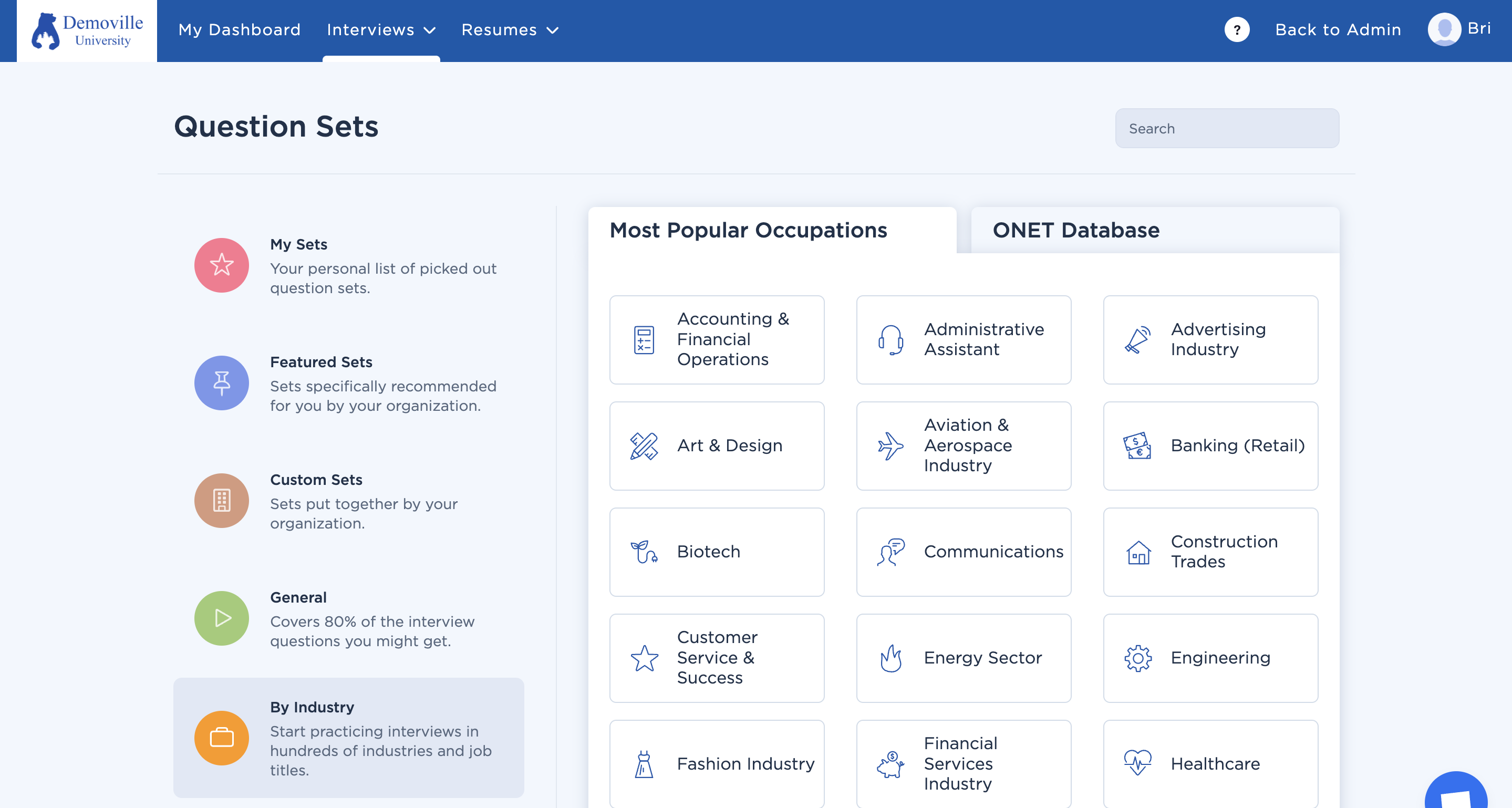
Pick a set of questions — general or industry-specific — record your answers, and be ready for anything the interviewer might throw at you.
Learn how to handle confrontational hiring managers.
Prepare for even the most unpredictable questions.
Discover unique strategies for video interviews you won’t find anywhere else.
.jpg)

Have trouble “selling yourself?” Not sure how to describe your achievements and strengths? Our Answer Builder has got you covered.
Learn how to tell compelling stories about your professional wins.
Describe your strengths so that hiring managers see you as the perfect fit.
Use a proven format that wows interviewers and makes your skills stand out.
You’ll feel as if you’re working 1-on-1 with an expert career coach. Get instant feedback on your answers and concrete advice for what exactly to improve.
Cut “filler” words from your responses.
Learn how to maintain eye contact and display positive body language.
Adjust your pace of speaking and get pointers on your vocabulary use.
.png)
Stop wasting your time searching the entire internet for advice you're not sure is good. Use Big Interview to get access to strategies and examples that guarantee results - all in one convenient place.
Our mission is to break down barriers to career progression and ensure that everyone has equal access to fulfilling careers, regardless of their background or experience.
We know Big Interview works because we’ve tested and refined our platform with hundreds of thousands of job seekers before you. And our statistics clearly show that Big Interview is effective. Our users get a job after 4.5 weeks on average. That’s almost 5x faster than the current US average of 22.6 weeks.
How have we achieved this? In short — all thanks to the expertise of our co-founder and chief coach, Pamela Skillings.
In addition to developing Big Interview, Pamela Skillings spent 12 years in executive-level marketing and human resources jobs for Fortune 500 companies (including Morgan Stanley, MasterCard International, and Citigroup). Pamela also still works with corporate and government clients to develop training, retention, communications, and recruiting programs. Clients include Citigroup, American Express, Ernst & Young, and the City of New York. Pamela’s work with corporations keeps her up to date on hiring trends and the employer perspective, which helps inform her coaching work with job seekers.
If you have 2 hours to spare, Big Interview will give you enough value to make you feel prepared for the upcoming interview. We have a special “Fast-Track” module designed specifically for people who need to prepare NOW. If you’re pressed for time, use the “Interview Practice” tool — you’ll get immediate feedback on your interview answers and plenty of insights along the way. Plus, great sample answers to common questions you can get inspired by.
Sadly, it doesn’t work like that. Almost 50% of candidates fail the interview because they didn’t know how to *properly* research the company. Two out of three candidates struggle to make eye contact with the interviewer. 39% of candidates get rejected because of poor body language. We could go on and on with the stats. Truth is — interviewing for jobs is uncomfortable and difficult, solely because no one ever taught you how to do it. With Big Interview, you gain invaluable knowledge almost no other candidate has. With preparation, you’ll get an edge over 9 out of 10 other applicants who believe they simply “got this.”
You’ll get a huge boost to your interviewing skills within hours. But, obviously, the more work you put in, the better results you can expect. Big Interview is not *just* about interviewing. Inside our app, you’ll find lessons on salary negotiation, a resume writing course, a professional resume builder that helps you highlight your assets, and tips on how to find better jobs. And it doesn’t end when you do land that job. Our platform teaches you how to make the most of your career, get an internal promotion, go for that first managerial job, or even switch industries later in your career. That’s why one of our plans is lifetime access. Big Interview can become your ultimate career toolbox and help you navigate through all the challenges your professional life may throw at you.
One-month access to Big Interview costs $39. A three-month plan is $99. Lifetime access — $299. And again, to put that into perspective — Big Interview typically helps you shave around 4 months off of your job search. That’s 4 fewer months of not getting your salary, and 4 fewer months of constant stress and anxiety. And if you’re still not sure if Big Interview is worth your investment, just give it a try. If you don’t think it’s worth what you’re paying, we’re offering you a 30-day money-back guarantee. No questions asked.





“Big Interview has helped me prepare for so many interviews. So many job offers. If you haven’t used this app, you really need to.” - Dayonna Thomas